Recently, Q-Tech Quantum officially released the modular low-temperature ion trap , which is another major breakthrough in the field of ion trap quantum computer engineering after the release of the quantum measurement and control system . integrates the three major elements related to ion traps, namely optical, mechanical and electronic, into a modular design, realizing the overall package of ion traps and supporting plug-and-play, laying the foundation for miniaturization and commercialization of ion trap quantum computing systems and leading the technical trend of low-temperature modules for ion trap technology.
The captive ion quantum system is one of the most promising systems for practical quantum computing (QC). As the core component of the captive ion quantum computer, the performance of the ion trap itself directly determines the number and quality of quantum bits, so the design optimization and process improvement of the ion trap has been one of the research hotspots in the field of ion trap quantum computing.
Currently, ion trap R&D teams around the world have achieved relatively abundant scientific results in improving the ion trap confinement performance, and various forms of ion traps have been applied, such as quadrupole traps, blade-type ion traps, pin-pole traps, 2.5D multilayer electrode traps, and surface traps. Among them, research-oriented ion traps, because of their focus on confinement performance, have been plagued by difficulties in assembly, poorly integrated electrical and optical design, and high requirements for operator expertise. In order to realize convenient engineering installation, ColdQuanta and AQT of Austria have introduced modular design ion trap package products respectively, but domestic research institutes and related quantum computing companies have not carried out related R&D, which has been a gap in the field of domestic atomic-type quantum computers.

Figure 1 Blade type ion trap of a foreign research team
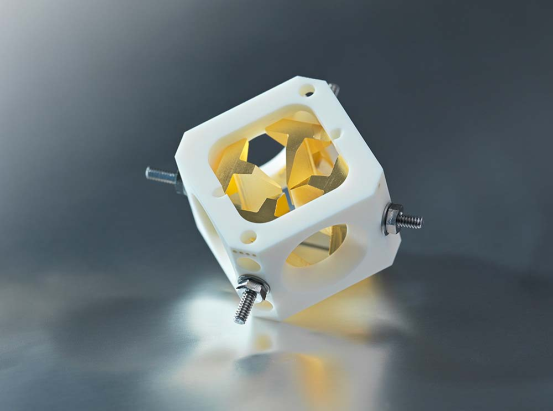
Figure 2 PINE, an ambient temperature ion trap product from Austria's AQT
Against the above background, as the first ion trap quantum computing company in Asia and the first in China, QT Quantum started to develop the low-temperature ion trap modular package product in July 2021. The product adopts a segmented blade electrode structure, and through a highly integrated design and micro-nano processing process, the ion trap electrode, DC filter circuit, and atomic source are packaged as a whole in a matchbox-sized space, with standardized electrical interfaces and optical channels. In terms of ultra-high vacuum acquisition, based on the cryopump effect and high-performance adsorption materials, ultra-high vacuum acquisition is achieved directly inside the ion trap package.

Figure 3 Effect of appearance
The housing is an octahedral column design with high purity oxygen-free copper material to ensure performance. The surface is gold-plated to prevent surface oxidation. This design significantly reduces the surface outgassing rate and blackbody emission rate, improves the vacuum level of the ion trap operating environment, and reduces radiation heat leakage. Considering the convenience of laser manipulation, the octahedral housing of is equipped with multiple laser windows, and the surface enhancement coating technology enables laser transmittance of more than 95%. At the same time, to shorten the distance from the photon collection objective to the center of the ion trap, the also has a conical inner concave transmission window for photon collection on the surface of the casing, which greatly improves the efficiency of photon collection and guarantees the fidelity of quantum state detection.
In terms of circuit design, the Qico Quantum research team abandoned the free-space alignment method and instead standardized the design of the miniature high-density multi-core interface and the miniature RF connector to achieve a compact internal circuit. At the same time, the symmetrical angled distribution of electrodes helps long chain type ion confinement, which also benefits from the space surplus brought by the circuit design.

Figure 4 Comparison of the size of and a dollar coin
Currently, has been designed and is being processed and tested, and the related intellectual property rights have been submitted for application/license. After unremitting efforts, the product has been ordered, and many universities and research institutions in China have expressed their willingness to purchase it and started negotiations with Qico Quantum. The successful development of means that China has mastered its own intellectual property rights in the core components of ion trap quantum computing, laying a solid foundation for ion trap route quantum computers to achieve 100 bits, or even 1,000 bits. As a leading company in ion trap quantum computing in China, Q-Tech Quantum has been promoting the engineering and productization of quantum computers, and this time it has taken the lead in realizing the productization of ion trap modules in China, which has injected a strong force for the industrialization of quantum computing in China.