

China’s first national standard for self-driving vehicle will come into force in March 2022.
-
-
The six-tier standard provides official definitions for self-driving cars from L0, which relies largely on human drivers, to L5 that achieves full driving automation
-
The Chinese government has been relatively tentative when it comes to autonomous vehicles and as it looks to be ahead in the global self-driving vehicle industry, the country laid out its first national standards for grading autonomous driving. Drafted by 11 major carmakers and suppliers, the standards will come into effect in March 2022.
The benchmark is basically for carmakers to develop futuristic autonomous technology involving vehicles. Basically, the six-tier standard, “Taxonomy of Driving Automation for Vehicles”, provides official definitions for self-driving cars from level zero (L0), which relies largely on human drivers, to L5 that achieves “full driving automation”.
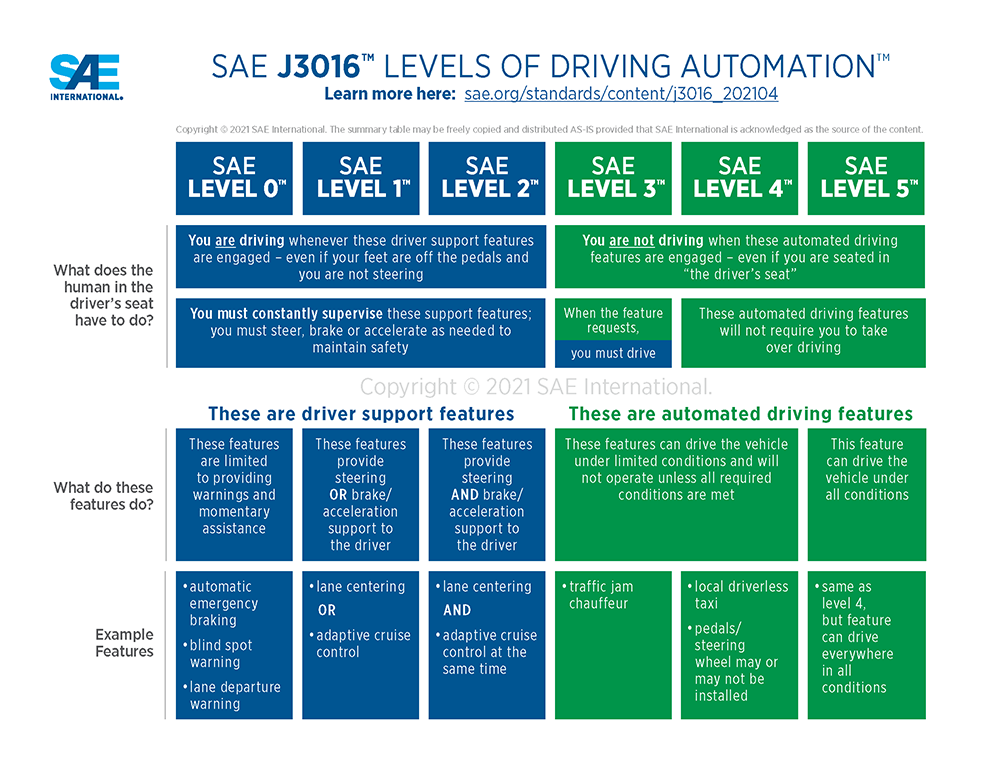
Currently, local carmakers in China use the United States-based Society of Automotive Engineers’ (SAE) definition. The classification by the SAE was rolled out in 2014 and updated several times since. It also has a six-level rating based on the engagement of human drivers and automation.
SAE vs Chinese self-driving vehicle standard
To be frank, the SAE definition is a bit ambiguous as it defines L2 as “partial automated driving” and L4 level as “high-level automated driving”. On the contrary, the Chinese version of classification is more detailed and clear.
China’s L0, L1 and L2 levels require that the driver and the automated driving system work together on detecting and responding to objects and events while the SAE version only requires drivers to perform the tasks for these levels.
Meanwhile, L3 is named as Conditionally Automated Driving as it could continuously perform all dynamic driving tasks under its designed operating conditions. L4 on the other hand is called highly automated driving. At this level, the vehicle is also able to take measures to reduce the risk of accidents should the driving automation system fail to perform the necessary actions.
Then there is L5 for fully automated driving. This level means that there are no limitations by any operating design scope, and the vehicle can continuously perform all dynamic driving tasks under any conditions. Should the driving automation system fail to perform dynamic driving tasks, the L5 system takes measures to reduce the risk of accident and to minimize any damages
The latest standards in China were drafted by 11 major carmakers and suppliers, including Ford, BMW and Volkswagen’s China units as well as some domestic giants like Geely and GAC Group. The Ministry of Industry and Information Technology (MIIT) will oversee its adoption. Interestingly, the standards are not mandatory. However, the taxonomy is a recommended standard that authorities hope self-driving car companies will voluntarily adopt.
About ICV Tank
At ICV Tank we are passionately curious about New Technology and we strive to deliver the most robust market data and insights, to help our customers make the right strategic decisions.
We bring together the deepest intelligence across the widest set of capital-intensive industries and markets. By connecting data across variables, our analysts and industry specialists present our customers with a richer, highly integrated view of their world.
That is the benefit of The New Intelligence. We’re able to isolate cause and effect, risk and opportunity in new ways that empower our customers to make well-informed decisions with greater confidence.
Click here to get a sample report:China’s self-driving vehicle standards VS SAE
If you want more details about this report please contact us.
Contact details:
No: +00 852 5485 1518
Email: infer@icvtank.com
Website: http://www.icvtank.com


